
Rewriting Urgency: Choosing Ease
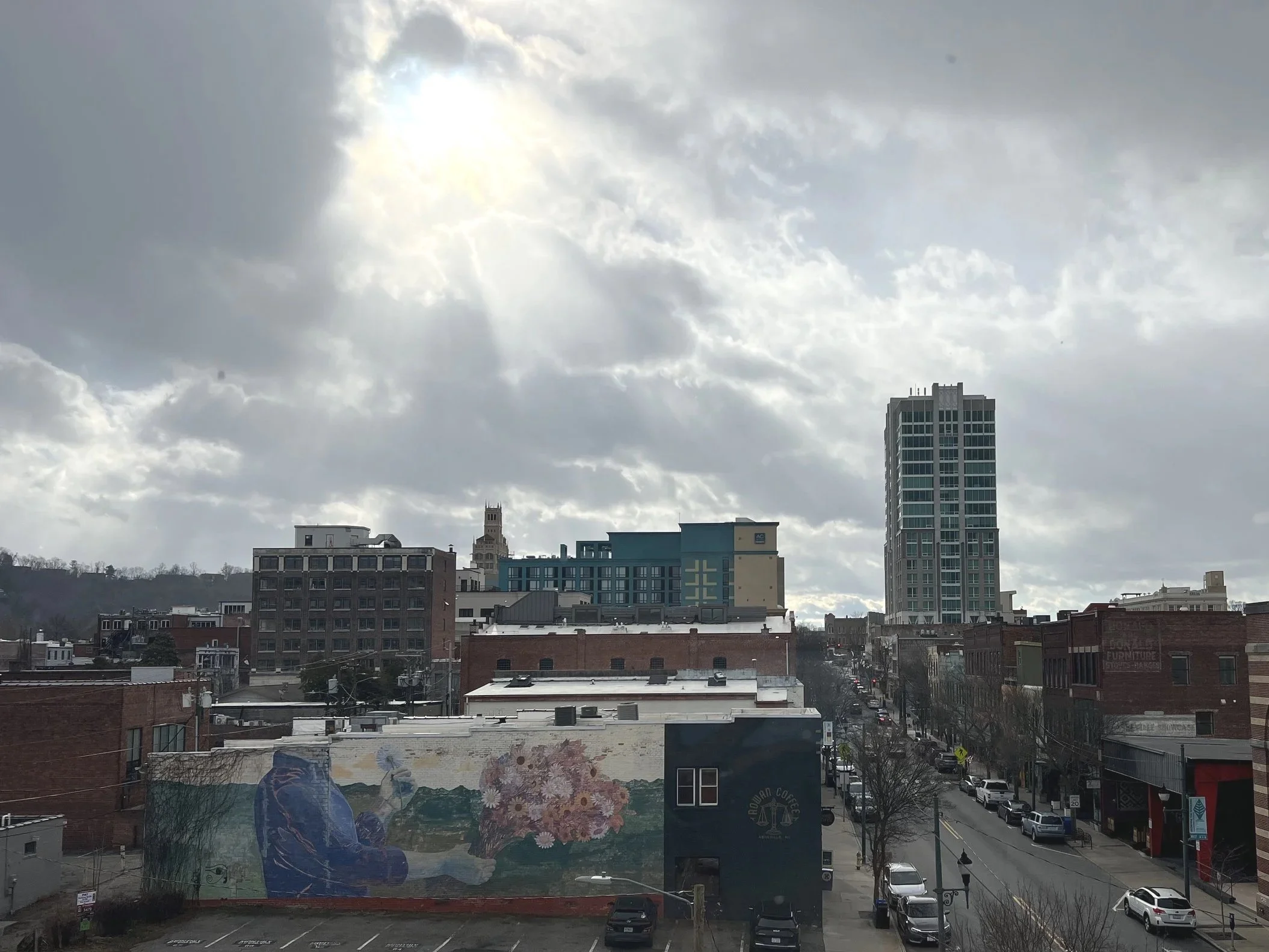
Pausing to admire the view, part of the Asheville skyline
“To pay attention, this is our endless and proper work.”
— Mary Oliver
The conversation that sparked this reflection didn’t happen in a rush.
It unfolded during a weekend workshop I attended in Asheville, in one of those in-between moments. It was during instruction, and we discussed it more in-depth during group discussion. It showed up in the pause that followed, when the room grew quiet and no one hurried to fill the space.
We had been talking about urgency. ASAP … as soon as possible …about how quickly we move to respond, to decide, to act. About how often speed is mistaken for clarity.
Then, in the stillness, someone offered a simple observation. It wasn’t framed as advice or teaching. Just something noticed and gently shared.
If we can stay in the pause long enough, and truly listen to the quiet, what we’re seeking often reveals itself.
No one rushed to respond. The room held it. And in that holding, something softened.
That thought stayed with me on the ride home as this weekend ended. Not as something to do, but as something to notice. A reminder that attention, not acceleration, is often what brings us back into alignment. That so much of what we chase through urgency might already be present, waiting not for effort, but for listening.
For a long time, urgency wore a convincing costume.
It sounded responsible.
It looked productive.
It promised that if I just moved faster, tried harder, pushed a little more, everything would fall into place.
ASAP became the quiet drumbeat beneath my days.
As soon as possible.
As fast as possible.
As much as possible.
What urgency rarely asks is whether the pace is sustainable, or humane, or even true.
Urgency is not the same as importance.
Urgency is not the same as devotion.
Urgency is often fear in a well-tailored suit.
The Subtle Cost of Urgency
Urgency compresses time.
It tightens the body.
It pulls us out of presence and into performance.
When urgency leads, listening becomes secondary.
Rest becomes negotiable.
Joy becomes optional.
Over time, urgency trains us to believe that ease is laziness and that slowness is failure. It teaches us to abandon ourselves just to keep up with an invisible clock.
And yet, so much of what matters most cannot be rushed.
Grief does not obey deadlines.
Healing does not respond to pressure.
Creativity refuses coercion.
Love unfolds on its own calendar.
Ease Is Not the Enemy of Progress
Ease has been misunderstood.
Ease is not giving up.
Ease is not apathy.
Ease is not doing nothing.
Ease is the right effort.
Ease is alignment.
Ease is movement that does not require self-betrayal.
When ease is present, the nervous system stays open. The body stays available. The work becomes a conversation instead of a command.
Ease allows wisdom to enter the room.
From Attention to Action, Gently
What that quiet moment in Asheville reminded me is this: attention shapes pace.
When we pay attention, we naturally move differently. We stop forcing timing and start trusting rhythm. And from that place, even our language begins to change.
That’s where my relationship with ASAP began to shift.
Reframing ASAP
After our discussion, I began to rewrite the meaning of ASAP in my journal. Not as a rejection of momentum, but as a reclamation of how momentum feels.
Here are a few new translations that were shared, and a few that came to mind:
ASAP: As Softly As Possible
ASAP: As Sustainable As Possible
ASAP: At a Steady, Attuned Pace
ASAP: As Supported As Possible
ASAP: At the Speed of Presence
None of these eliminate forward motion.
They simply refuse harm as a requirement.
My favorite became this:
As Supported As Possible, Without Leaving Myself Behind
The Body Knows the Difference
The body can feel the difference between urgency and ease immediately.
Urgency is shallow breath.
Ease is a fuller inhale.
Urgency narrows vision.
Ease widens the field.
Urgency asks, “How fast can I get there?”
Ease asks, “Can I arrive intact?”
When we choose ease, we do not abandon responsibility. We abandon unnecessary strain.
A Different Kind of Discipline
There is discipline in urgency, yes.
But there is also discipline in restraint.
It takes practice to pause.
It takes courage to slow down in a culture that equates speed with worth.
It takes trust to believe that what is meant for you will not disappear if you move with care.
Ease is not passive.
Ease is deeply intentional.
It is the discipline of listening before acting.
Of choosing rhythm over force.
Of allowing life to meet you halfway.
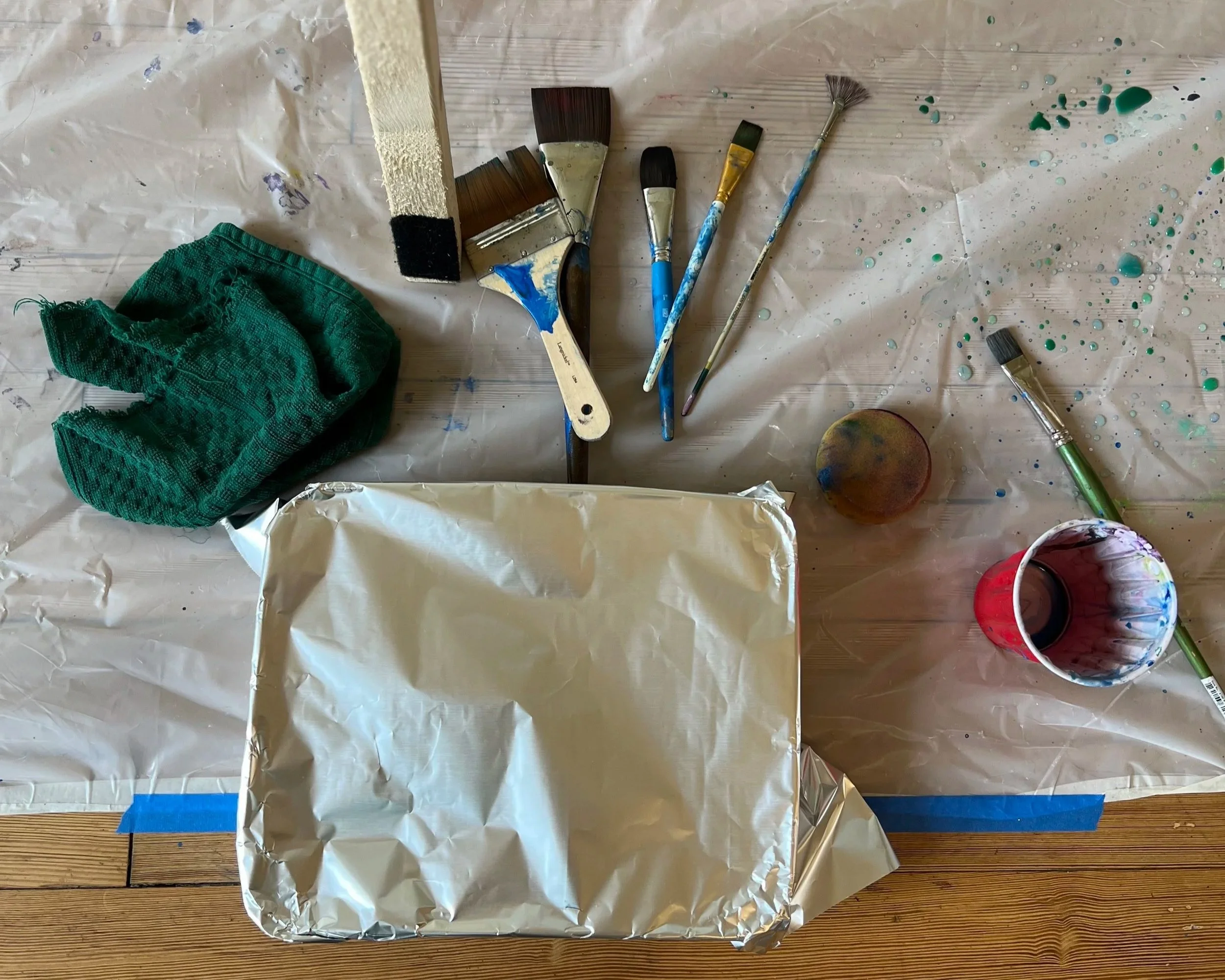
Pausing before I paint
Closing
This past weekend’s workshop didn’t offer answers. It offered space.
And in that space, I was reminded that what I’m seeking rarely responds to pressure. It responds to presence.
Nothing meaningful blooms on demand.
Presence is not a delay.
Gentle is still forward.
And maybe ASAP was never asking us to hurry at all.
Maybe it was inviting us to move
as softly as possible.
An Invitation
If you find yourself living under the constant pressure of “now” and “faster” and “already late,” consider this a gentle invitation.
You are allowed to move at the pace of truth.
You are allowed to take up time.
You are allowed to choose ease and still be devoted, committed, and productive.
And maybe, just maybe, ASAP can mean something entirely new now.