

Airport Mesa Sedona AZ July 2025
Some memories don't seem important when they're happening.
Only years later do you realize they were quietly preparing you for something you could never have imagined.
One of those memories takes me back to an anniversary gift.
Before Brian's ALS diagnosis, we treated ourselves to the first and only couples massage we would ever have together. I invited a massage therapist into our home, hoping for a relaxing afternoon to celebrate another year together.
When the massage ended, she quietly packed up her table, gathered her things, and left for the evening.
Yet it wasn't the massage we kept talking about.
It was the music.
Neither of us had ever heard anything quite like it.
The haunting voice of a Native American flute. The steady heartbeat of gentle drums. Horses running across open land. Rain falling. Thunder rolling across the sky.
There was something about those sounds that settled both of us in a way we couldn't explain. We spent the rest of the evening asking each other, "What was that music?" We wanted to hear it again, but we had no idea where to find it.
Life moved on, as it always does.
The memory stayed with us, but the music seemed to disappear.
Then we lived with ALS.
When someone is diagnosed with ALS, the disease doesn't enter one life. It enters an entire family. It reshapes routines, rewrites dreams, changes conversations, and asks every person who loves them to learn a new way of living. Brian carried the diagnosis, but together we carried the journey.
Anyone who has walked beside someone with ALS knows that it asks for everything. It slowly takes away movement, speech, independence, and eventually even the smallest tasks most of us never think twice about. As a caregiver, you spend countless hours trying to make someone you love just a little more comfortable. Sometimes success isn't measured in milestones. Sometimes it's measured in a peaceful breath... or a few precious hours of uninterrupted sleep.
Those moments become treasures.
Years after Brian's diagnosis, we were wandering the streets of Sedona when something familiar reached my ears.
At first, I could hear it only faintly in the distance.
The flute.
The gentle drumming.
Floating on the desert air.
I stopped walking.
Brian brought his wheelchair to a halt.
We looked at each other and smiled. We didn't need to say a word.
We simply followed the sound until it led us to a small shop with its front door standing open, the music drifting gently out onto the sidewalk.
Before we looked at a single thing in the shop, we asked, "What is this music?"
The shopkeeper smiled and pointed us toward a small display of CDs by John Huling.
We gathered all four albums they had and carried them home with us.
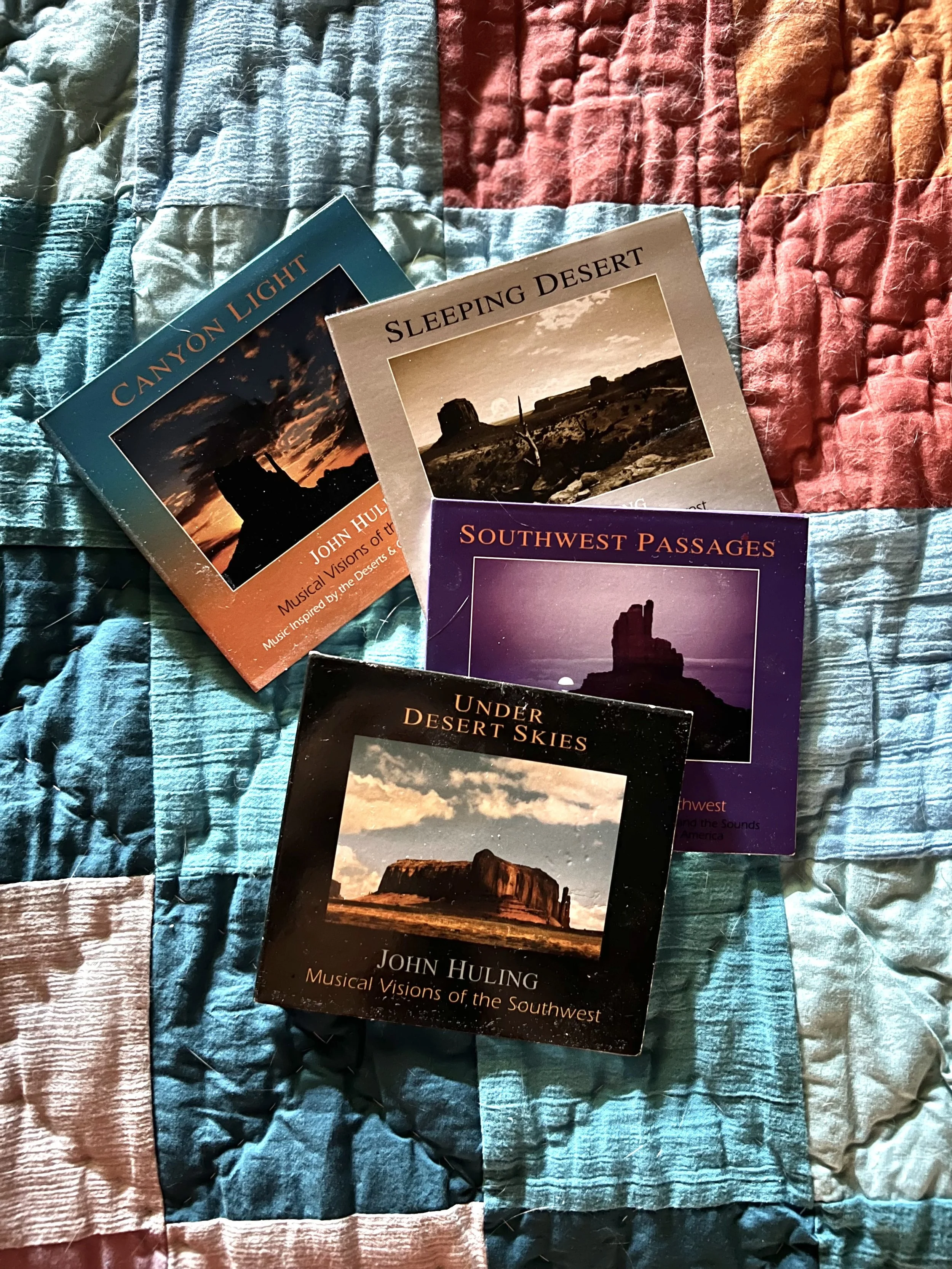
You can experience a sample of his music https://www.youtube.com/watch?v=FCsNm_-Qnx0,
If you love it you can purchase directly from his website. https://johnhuling.com
Those recordings became part of our evening routine for years to come. I still listen to them even now.
During those years of living with ALS, we discovered something that brought Brian a kind of peace that very little else could. It became something we both looked forward to.
More often than not, it was one of John Huling's recordings quietly filling our home.
And sometimes it wasn't music at all.
Sometimes it was the gentle rhythm of falling rain. The distant rumble of thunder rolling across the sky. The soft conversation of the wind chimes outside our window swaying with the breeze. Nature became part of the soundtrack of those days, and somehow those simple sounds seemed to invite the same quiet peace.
Looking back, I realize our home became a sanctuary of sound. Whether it came from a flute, a guitar, a distant thunderstorm, or the wind dancing through the chimes outside, each sound carried the same quiet invitation.
You can rest now.
We never thought of it as therapy.
We simply knew these sounds brought a peace that nothing else seemed to offer.
Whatever we chose, something shifted.
His body relaxed. His breathing became easier. The tension that had become such a familiar companion seemed to loosen its grip, if only for a little while.
Most importantly, he rested.
In those final years, restful sleep was no small gift.
It became one of the greatest gifts we could hope for.
Years later, while studying sound therapy, I came across the research that explained what we had experienced.
There was something deeply comforting in discovering that what we had witnessed wasn't simply wishful thinking or the desperate hope of someone trying to ease the suffering of a loved one. There was a growing body of research helping explain why sound could gently support the nervous system. Science gave language to something our hearts had already experienced.
The nervous system is deeply responsive to rhythm.
Our brains, our breath, our heartbeat, and even the subtle oscillations within our bodies naturally begin to synchronize with steady external frequencies. Researchers call one aspect of this entrainment. Rather than forcing the body to relax, sound gently invites it toward a more regulated state.
Nothing mystical.
Nothing exaggerated.
Simply the remarkable intelligence of the human nervous system responding to vibration.
Sound never cured Brian's ALS.
It didn't restore the muscles the disease had taken. It couldn't stop the progression. But it gave him something equally meaningful.
Comfort.
Presence.
Relief.
And sometimes enough calm that sleep could finally arrive.
As caregivers, we often feel helpless because we cannot fix what is broken. We want to remove the suffering, yet so often we cannot.
What we can do is create moments. Moments where fear loosens, where pain quiets, where a body that has been fighting all day finally remembers what peace feels like.
Those moments matter more than we sometimes realize.
Looking back, I don't believe this work began when I enrolled in a certification program. I believe it began years earlier, while we were living with ALS. The training simply gave a name to something my heart had already learned beside Brian.
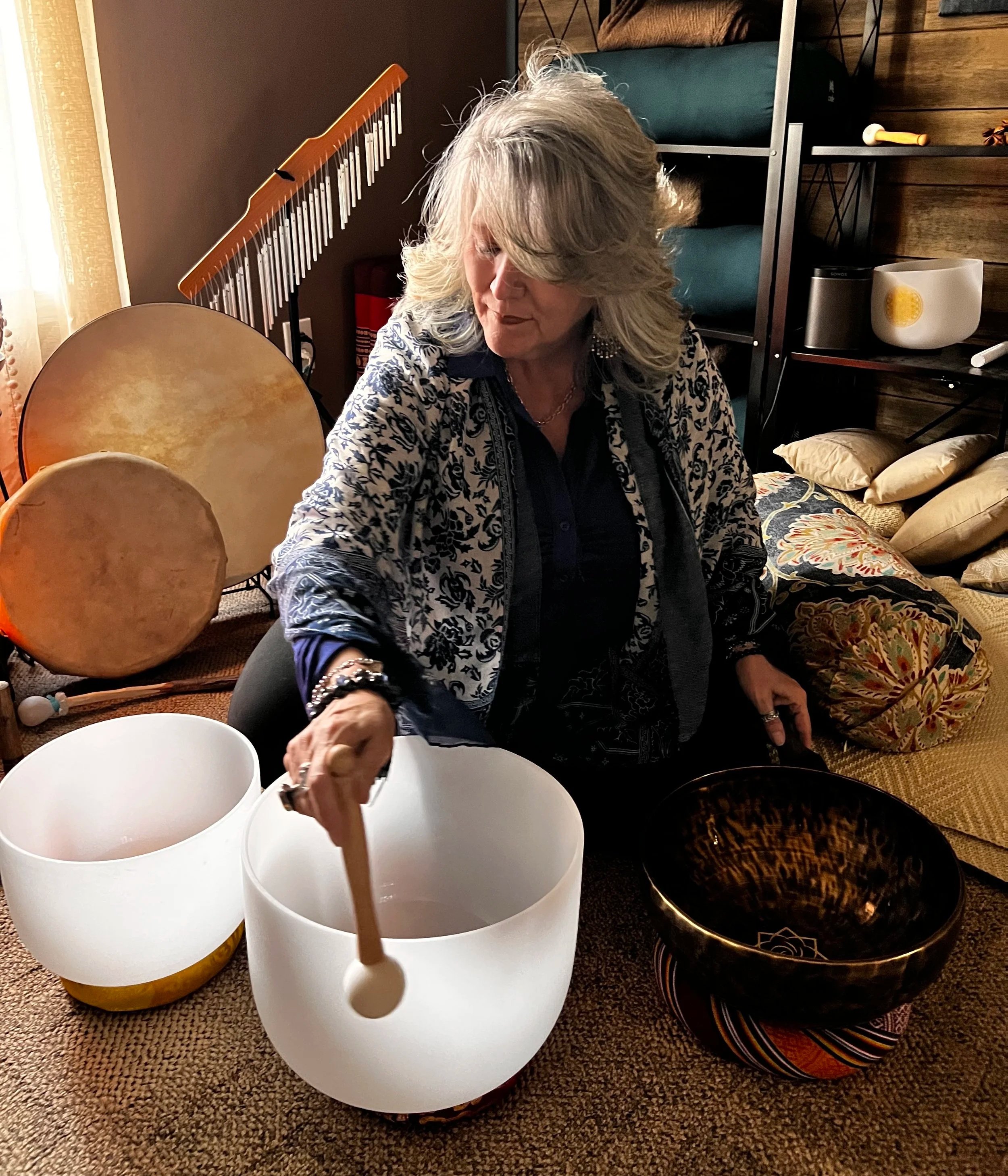
Years later, that same heart led me to Jim, and together we completed our certification in sound therapy. I often think this work really began long before either of us ever opened a textbook. It began in our home, with Native American flute music softly filling the room while the man I loved finally found a little rest.
Caregiving prepared me to understand that comfort is not always the same thing as curing.
Sometimes caring for someone means letting go of the need to fix what cannot be fixed and choosing instead to simply be present. To create an environment where the nervous system can soften, where the body can exhale, and where the soul can find a moment of rest.
That understanding has changed the way I view wellness entirely.
We often chase dramatic transformations. We search for the breakthrough, the miracle, the one thing that will make everything different.
Yet some of the most profound moments happen quietly.
A gentle melody begins to play. Rain begins to fall. The wind chimes answer the breeze. A room grows still.
The nervous system remembers a rhythm it had almost forgotten. Not because disease has disappeared. But because, for a little while, peace has entered the room.
You don't need training to offer this to someone you love, or to yourself. You simply need permission to let a sound — any sound that feels like rest — fill the room and stay a while.
If you've ever walked beside someone living with illness... or if you're carrying more than anyone realizes... my hope is that you'll remember this.
Sometimes healing doesn't arrive as a cure.
Sometimes it arrives as a softened breath, a quiet room, the sound of rain against the window, a favorite melody, or simply someone willing to sit beside you while you listen.
Perhaps the greatest gift we can offer one another isn't the answer, but a place where the soul finally feels safe enough to rest.

Sunset at Airport Mesa, Sedona AZ August 2011