

Ripples
Six months after releasing Tattered & Mended, six readers shared the stories, memories, and moments that stayed with them. Their words reminded me that once we release our stories into the world, we never really know how far the ripples will travel.

Rowers at sunset….
Six Months of Tattered & Mended
Six months ago, I released Tattered & Mended: Soulful Stories of Life, Love & Legacy into the world.
There is something strange and beautiful about releasing a book. For so long, the stories belong to you. They live inside your memories, notebooks, photographs, conversations, scraps of fabric, old objects, tears, laughter, and those quiet corners of your heart where certain things are kept until you are finally ready to touch them again.
You shape them sentence by sentence. You decide what you are ready to share and what still needs to remain yours. And then one day, you close the cover and send it into the world.
The stories are no longer only yours.
I think that may be one of the greatest surprises of these past six months. I knew the stories I had written and what they meant to me, but I could never have known which ones would find their way into someone else's heart. I couldn't know which chapter would make someone stop, which object would awaken a memory, or which words might cause someone to whisper, I know this feeling.
For this six-month milestone, I asked readers to share photographs with the book and tell me what stayed with them. What came back was so much more than reviews or testimonials. They sent me pieces of their lives.
And somewhere in those responses, Tattered & Mended began telling another story. Not simply the story I wrote, but the story of what happened once it reached their hands.
The Making of a Life
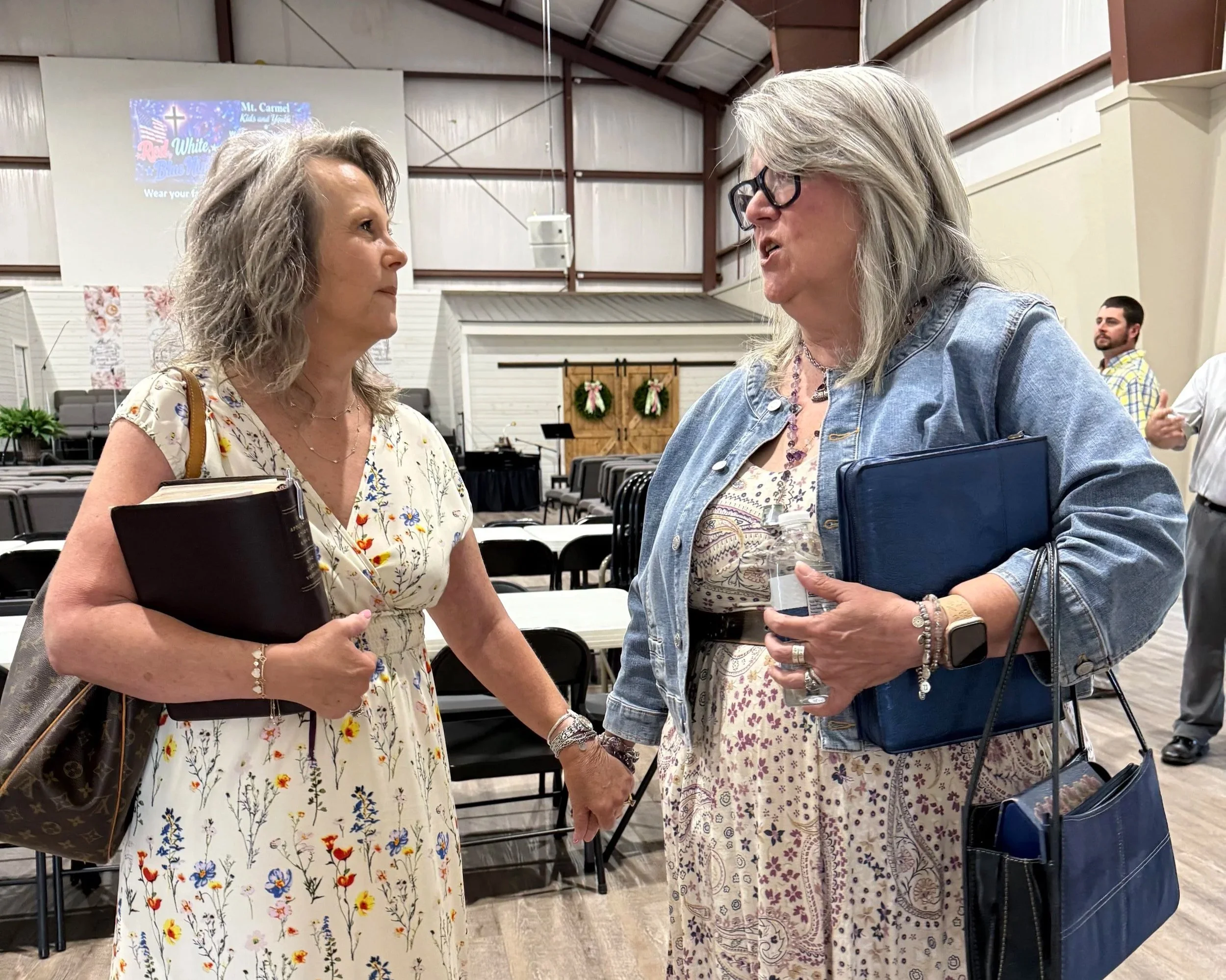
My cousin, and friend Carol surprised me when she told me her favorite part of the entire book was the Introduction, “How It Began: Stitching a Life from the Inside Out.”
She saw the little girl in those pages, the daughter learning to sew beside her mother, the lessons of not wasting something that could still be used, and the oldest daughter learning responsibility, dependability, and what it meant to give pieces of herself to the people around her.
Carol especially connected with my realization years later that the act of holding space, whether for people, memories, or materials, can itself be a sacred art.
Reading her words reminded me how much our beginnings matter. Long before we understand what we are becoming, the threads are already being placed in our hands. A sewing lesson becomes an artistic practice. A childhood responsibility becomes a capacity for caring. A pile of scraps becomes an understanding that worn, leftover, broken, and forgotten things can still become something beautiful.
Perhaps we spend much of our lives looking backward and realizing the pieces were never quite as random as they seemed.
Carol ended by telling me, “I know your Mom is smiling in Heaven and is so very proud of you.”
I hope she is. And sometimes I still feel as though she is leaving little threads for me to follow.
The Scars We Carry
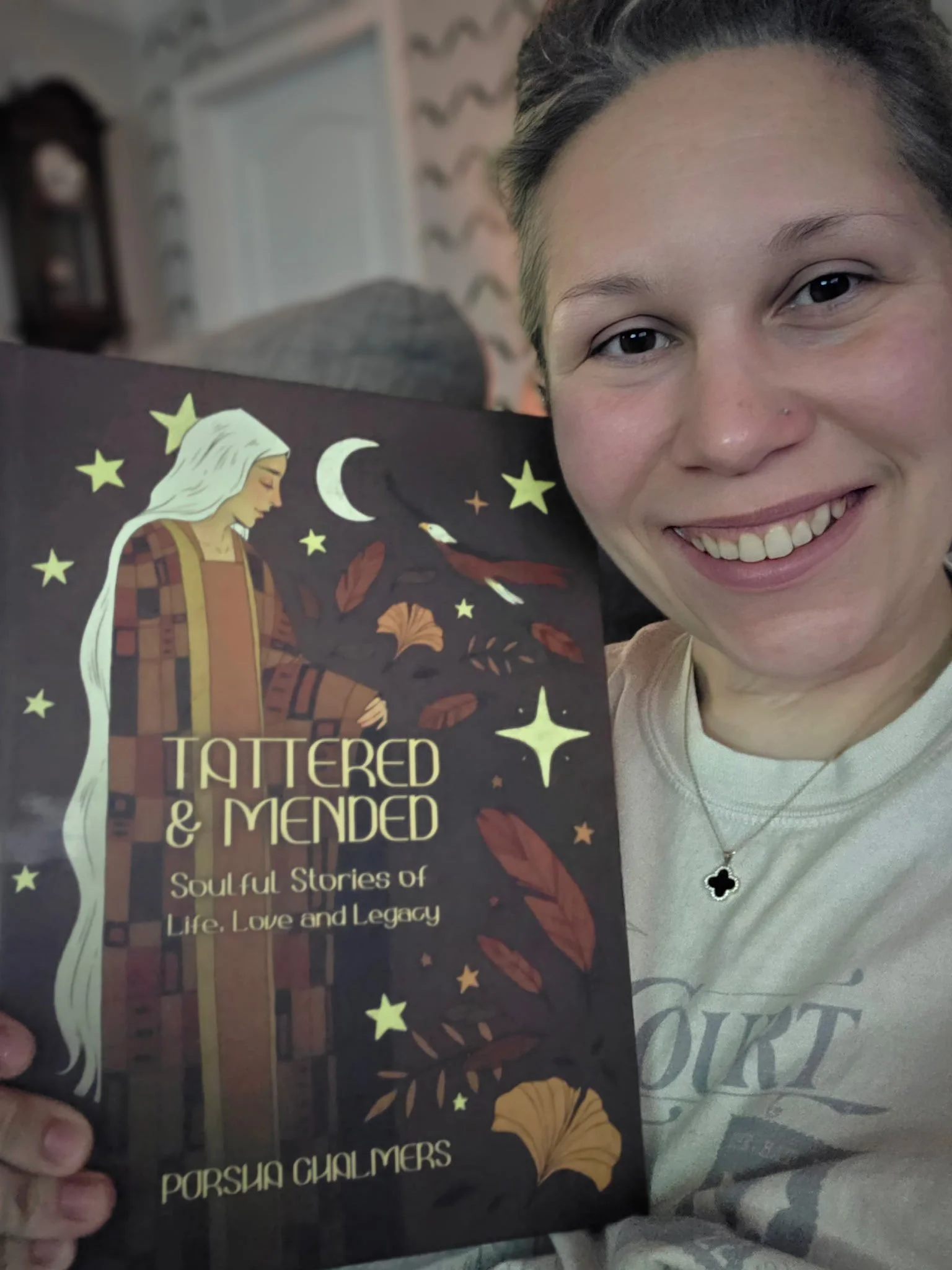
My friend Emily, who is also part of the book herself, brought me back to another part of its heart: grief.
She reflected on losing someone you love and the truth that no one can completely prepare us for what comes afterward. Emily wrote about watching me take some of the deepest pain of my own life and try to turn it into something that might offer comfort to someone else.
But it was what she said about scars that stayed with me most:
“Sometimes healing doesn't mean becoming the person you were before. Sometimes it means accepting what you've been through, carrying the scars it left behind, and discovering a new kind of strength within yourself.”
I don't believe healing always returns us to who we were. Some experiences change us permanently, and there are losses after which there is no going back to the person who existed beforehand. There is only forward, not forgetting or pretending or erasing, but learning to carry what happened differently.
The scar remains, but eventually we may understand that a scar isn't evidence that healing failed. Sometimes it is evidence that healing happened, maybe imperfectly, maybe slowly, and maybe with tenderness that still catches us unexpectedly.
But healing nonetheless.
When Memory Has Texture
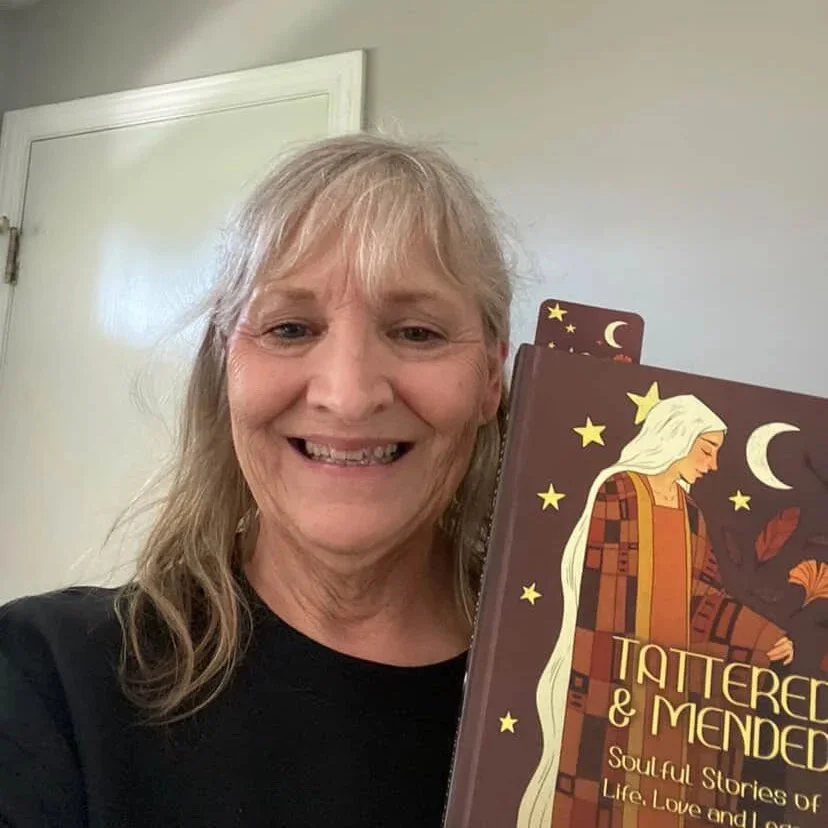
My friend Karrie chose two chapters that stayed with her: “We Are All Made of Stars” and “Holding Memories.” Then she told me about a small purse from the 1920s that belonged to her great-grandmother.
An ordinary object to almost anyone else. Anything but ordinary to Karrie.
She wrote, “You can hold a piece of the past in your hands and feel the love that went into the piece.”
That sentence could live at the very center of Tattered & Mended. I have always been drawn to things carrying evidence of another life: old fabric, worn wood, handwritten letters, photographs, jewelry that once belonged to someone else, and quilts stitched by hands I may never know.
There is something about holding an object that belonged to another person that can collapse time for just a moment. They were here. Their hands touched this. Their life brushed against mine.
Karrie ended her reflection with another sentence I keep returning to: “Symbols are everywhere if we just look for them.”
Maybe that is part of the work of living, learning to look and notice, and realizing that something appearing completely ordinary may be carrying an entire story.
A Table Full of Stories
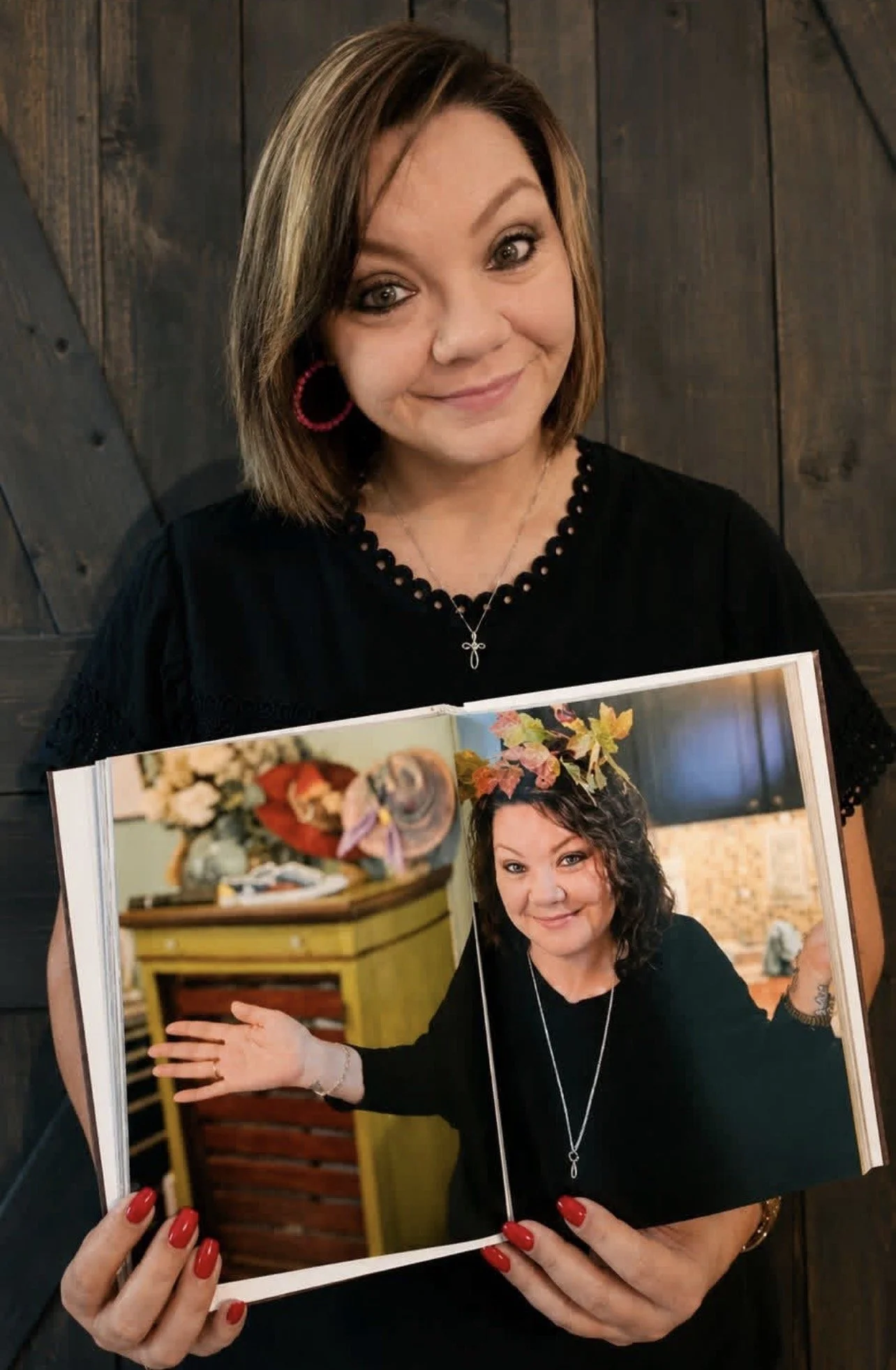
My friend Misty, another whose story lives within the pages of the book, described Tattered & Mended in a way that made me smile. She called it a compilation of different walks and different journeys, and then she wrote:
“Some of grief, some of growth, some of gratitude, and all of love.”
I don't know that I could summarize the book much better myself.
The stories in Tattered & Mended are not the same, and that was never the point. Life doesn't hand each of us the same story. We love differently. We lose differently. We celebrate differently. We heal differently. We remember differently.
Misty reminded me that each story matters because of what it carries. One person's grief doesn't diminish another's, and one person's joy doesn't make another person's sorrow less important. We simply pull up more chairs and make room.
Maybe that is storytelling at its best: a table where many different lives can sit beside one another and say, This happened to me. This is what it meant. Maybe something in my story will help you carry yours.
The Blue Towel
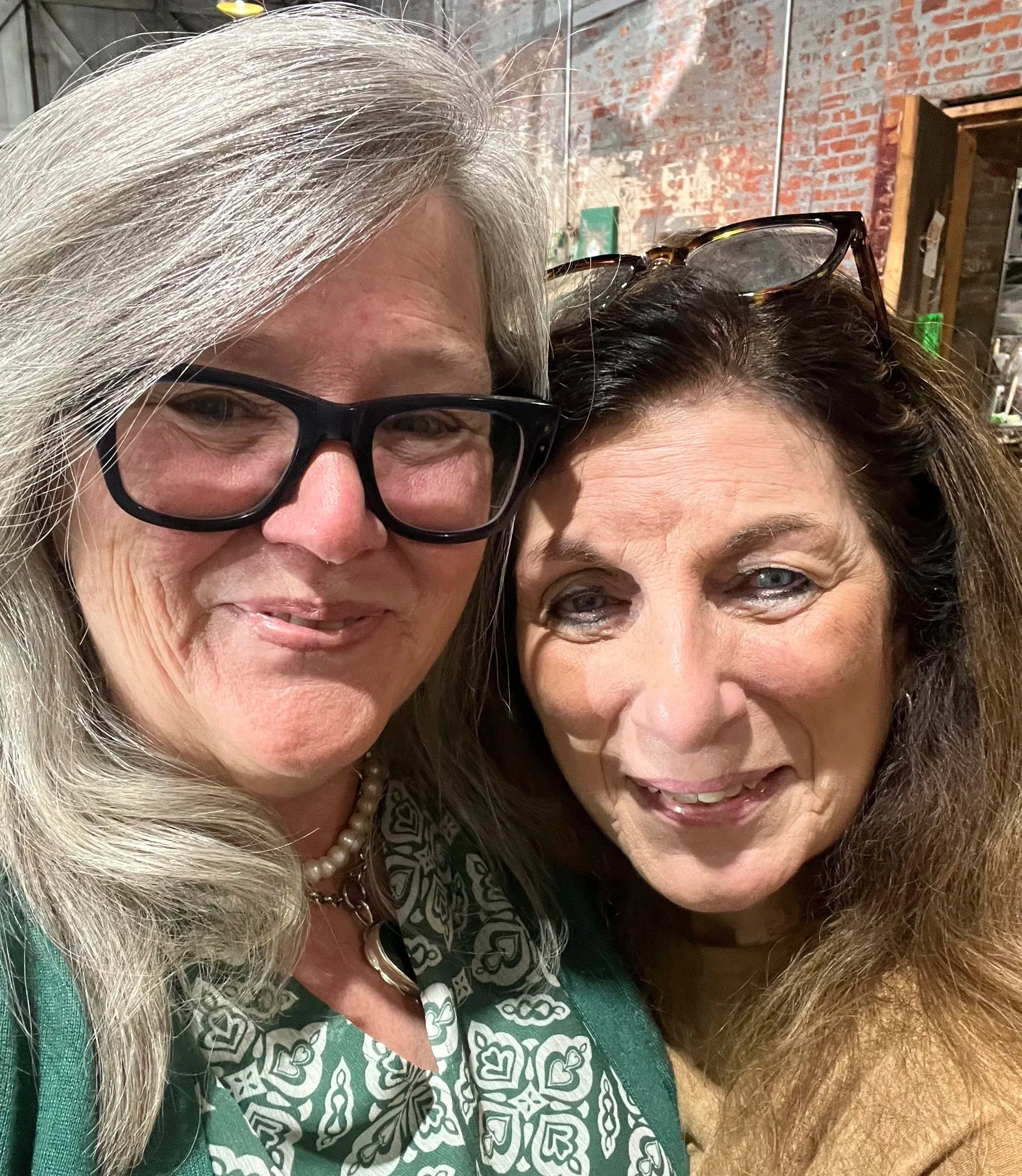
Then my friend and fellow creative Abby sent me her story. Her favorite part was “Holding on to Cherished Remnants: Memory as Texture.”
Abby lost her son in a car accident twenty years ago. She told me about his clothes and the shirts she saved, always imagining that one day she might have them made into a quilt.
But there was something else she kept.
A blue towel.
The last morning Abby saw her son alive, he had just gotten out of the shower and was wrapped in that towel. They talked about their plans for later that day. Abby went to work, and her son later called to tell her he was on his way.
Then came the phone call no mother should ever receive. He had been in an accident. By the time Abby arrived at the hospital, he was gone.
For twenty years, that blue towel has remained in the nightstand beside her bed.
She wrote, “I'm not sure what I could make it into, but I can't part with it.”
I sat with that sentence because sometimes the thing we keep doesn't need to become anything else. Not every remnant needs to become art. Not every shirt needs to become a quilt. Not every object needs to be reinvented or repurposed.
Sometimes the towel itself is enough.
What we are holding isn't simply cotton or fabric or thread. We are holding a morning, a conversation, plans for later, and the last ordinary moment before life became anything but ordinary. We are holding the memory of someone we love.
Sometimes keeping is part of the mending.
The Things That Carry Us
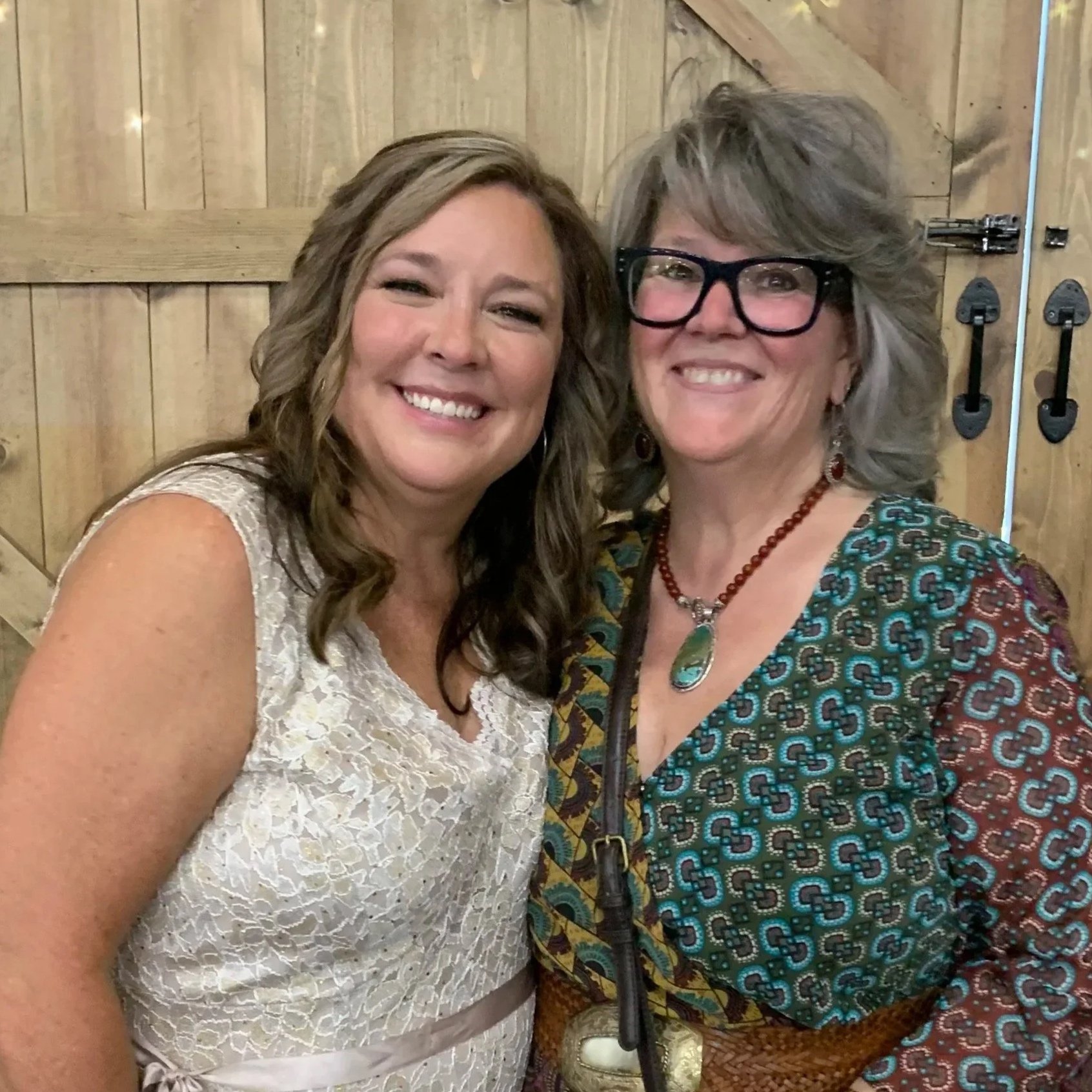
And then came my friend Kathy.
Kathy's response wandered through the book much the way memory itself wanders. She remembered the necklace and the saddlebag, the phoenix paperweight, and Rhonda's dad with the familiar smirk she could still picture from church. She told me she felt as though she were there with each person during their story.
One line from the book especially stayed with her:
“I wanted you to have something to carry what matters, because you carried me when it mattered most.”
Perhaps it stayed with Kathy because she knows something about being carried.
During a frightening time with her heart, I gave Kathy a journal wrapped in pieces of an old patchwork quilt. That quilt had already served someone.
Once upon a time, someone had pieced those scraps together to make something warm. Eventually it came into my hands, I cut and stitched it, and part of it found another life in Kathy's hands.
She told me:
“I hug the quilted journal book you gave me during my heart issue and even though it was once someone's patchwork quilt used for warmth, I see... no, I feel this patchwork of cloth as healing my soul.”
I see... no, I feel.
Those words stopped me because that is Tattered & Mended. A piece of fabric doesn't know it was supposed to be finished when the quilt wore out. A memory doesn't disappear because a chapter of our life ends. Sometimes something made with our hands becomes a vessel for something we never knew it would need to carry: comfort, courage, faith, hope, love.
Kathy told me she was scared during that season and remembered my encouragement to stay the course, have faith, and trust that all would be well. Then she reminded me of something I need to keep remembering too: to listen for how God wants me to move.
Maybe that is part of the mending. Trusting that we don't always have to see the entire pattern to take the next stitch, and remembering that sometimes God sends people into our lives to help carry us through places we could not have walked alone.
Six Stories, Six Mirrors
When I put the reflections of these six women beside one another, something beautiful happens.
Carol saw my beginnings and the making of the artist. Emily saw grief becoming healing without pretending the scars disappeared. Karrie saw memory, connection, and the stories held inside ordinary objects.
Misty saw different lives gathered together through grief, growth, gratitude, and love. Abby showed me the sacredness of what we cannot bring ourselves to release. And Kathy reminded me about gratitude, faith, friendship, and the people and things that carry us when we need carrying most.
Just a few of the women who read the same book and somehow each held up a different mirror.
Perhaps that is one of the greatest gifts of releasing our creative work into the world. Eventually, other people begin showing us what we made.
What We Carry Forward
Six months ago, I thought I was releasing a book filled with stories from my life… my friends’ lives.
Today I understand that Tattered & Mended is also an invitation: to remember, to notice, to tell the stories, to honor the people who shaped us, to hold what still needs holding, to release what is ready to go, and to trust God with what we cannot yet understand.
Healing doesn't require us to erase the evidence of what happened. Sometimes we remain a little tattered. Sometimes the stitches show. Sometimes there are places that will always be tender.
But maybe those places aren't flaws. Maybe they are part of the pattern.
And maybe mending isn't about making something look untouched. Maybe it is about learning that what has been torn can still hold something beautiful.
Ripples
To those who have read our stories, thank you. Thank you for seeing the people inside these stories, and for trusting me with pieces of your own. Most of all, thank you for helping me see Tattered & Mended through your eyes.
And to everyone who has read the book, gifted one, sent me a photograph, shared a favorite passage, or told me part of your own story because something in mine opened that door, thank you. You have given this book a life beyond anything I could have created alone.
Six months ago, I released Tattered & Mended believing I was sending our stories into the world. What I understand now is that stories don't simply arrive somewhere and stop.
They ripple.
One story touches a memory. A memory brings someone back to a great-grandmother's purse, a mother's sewing lessons, a friend's handmade journal, or a blue towel tucked safely inside a nightstand for twenty years. One person's grief gives another person permission to acknowledge her own. One story of healing reminds someone that her scars don't make her less whole. One act of carrying another person reminds us of all the times someone carried us.
And then another story begins.
Maybe that is what these past six months have really shown me. I may have written the words, but I don't get to decide how far their ripples travel.
Some remnants become art. Some become stories. Some become memory. Some simply stay beside us. And some become the very things that help carry us.
All of them can carry love.
If Tattered & Mended has created a ripple in your own life, I would love to hear about it. Tell me which chapter stayed with you. Tell me about the person you remembered, the object you still hold onto, or the story it brought back to the surface.
Because six months after releasing this book, perhaps the greatest gift has been discovering that the story didn't end when I finished writing it.
I simply released it.

A Sanctuary of Sound
Some memories quietly prepare us for the seasons we never see coming. In this deeply personal reflection, I share how an anniversary massage, an unexpected discovery in Sedona, and the sounds of Native American music became a sanctuary during our journey with ALS, ultimately shaping my path toward sound therapy and a deeper understanding of what it means to truly care for another.

Airport Mesa Sedona AZ July 2025
Some memories don't seem important when they're happening.
Only years later do you realize they were quietly preparing you for something you could never have imagined.
One of those memories takes me back to an anniversary gift.
Before Brian's ALS diagnosis, we treated ourselves to the first and only couples massage we would ever have together. I invited a massage therapist into our home, hoping for a relaxing afternoon to celebrate another year together.
When the massage ended, she quietly packed up her table, gathered her things, and left for the evening.
Yet it wasn't the massage we kept talking about.
It was the music.
Neither of us had ever heard anything quite like it.
The haunting voice of a Native American flute. The steady heartbeat of gentle drums. Horses running across open land. Rain falling. Thunder rolling across the sky.
There was something about those sounds that settled both of us in a way we couldn't explain. We spent the rest of the evening asking each other, "What was that music?" We wanted to hear it again, but we had no idea where to find it.
Life moved on, as it always does.
The memory stayed with us, but the music seemed to disappear.
Then we lived with ALS.
When someone is diagnosed with ALS, the disease doesn't enter one life. It enters an entire family. It reshapes routines, rewrites dreams, changes conversations, and asks every person who loves them to learn a new way of living. Brian carried the diagnosis, but together we carried the journey.
Anyone who has walked beside someone with ALS knows that it asks for everything. It slowly takes away movement, speech, independence, and eventually even the smallest tasks most of us never think twice about. As a caregiver, you spend countless hours trying to make someone you love just a little more comfortable. Sometimes success isn't measured in milestones. Sometimes it's measured in a peaceful breath... or a few precious hours of uninterrupted sleep.
Those moments become treasures.
Years after Brian's diagnosis, we were wandering the streets of Sedona when something familiar reached my ears.
At first, I could hear it only faintly in the distance.
The flute.
The gentle drumming.
Floating on the desert air.
I stopped walking.
Brian brought his wheelchair to a halt.
We looked at each other and smiled. We didn't need to say a word.
We simply followed the sound until it led us to a small shop with its front door standing open, the music drifting gently out onto the sidewalk.
Before we looked at a single thing in the shop, we asked, "What is this music?"
The shopkeeper smiled and pointed us toward a small display of CDs by John Huling.
We gathered all four albums they had and carried them home with us.
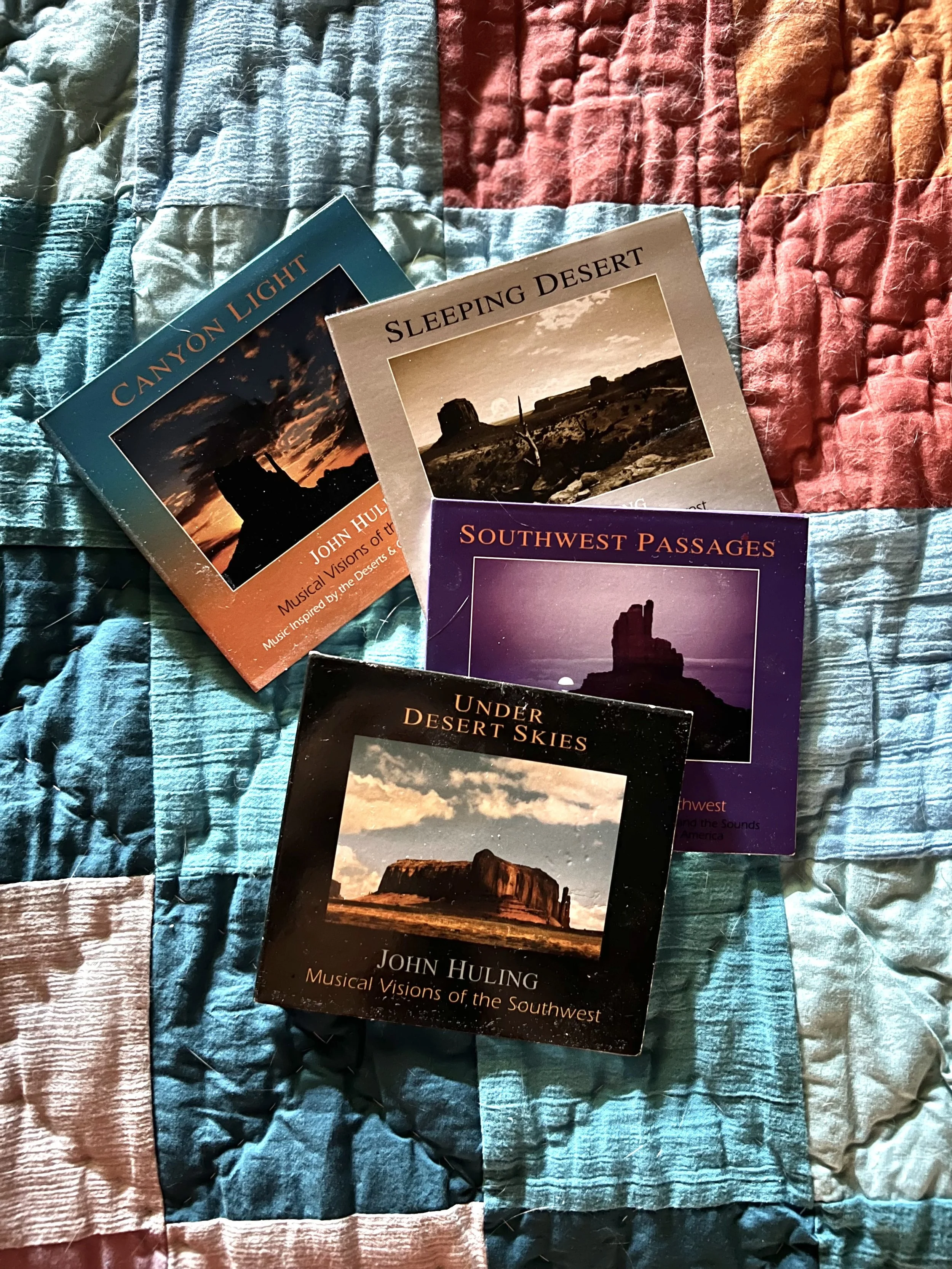
You can experience a sample of his music https://www.youtube.com/watch?v=FCsNm_-Qnx0,
If you love it you can purchase directly from his website. https://johnhuling.com
Those recordings became part of our evening routine for years to come. I still listen to them even now.
During those years of living with ALS, we discovered something that brought Brian a kind of peace that very little else could. It became something we both looked forward to.
More often than not, it was one of John Huling's recordings quietly filling our home.
And sometimes it wasn't music at all.
Sometimes it was the gentle rhythm of falling rain. The distant rumble of thunder rolling across the sky. The soft conversation of the wind chimes outside our window swaying with the breeze. Nature became part of the soundtrack of those days, and somehow those simple sounds seemed to invite the same quiet peace.
Looking back, I realize our home became a sanctuary of sound. Whether it came from a flute, a guitar, a distant thunderstorm, or the wind dancing through the chimes outside, each sound carried the same quiet invitation.
You can rest now.
We never thought of it as therapy.
We simply knew these sounds brought a peace that nothing else seemed to offer.
Whatever we chose, something shifted.
His body relaxed. His breathing became easier. The tension that had become such a familiar companion seemed to loosen its grip, if only for a little while.
Most importantly, he rested.
In those final years, restful sleep was no small gift.
It became one of the greatest gifts we could hope for.
Years later, while studying sound therapy, I came across the research that explained what we had experienced.
There was something deeply comforting in discovering that what we had witnessed wasn't simply wishful thinking or the desperate hope of someone trying to ease the suffering of a loved one. There was a growing body of research helping explain why sound could gently support the nervous system. Science gave language to something our hearts had already experienced.
The nervous system is deeply responsive to rhythm.
Our brains, our breath, our heartbeat, and even the subtle oscillations within our bodies naturally begin to synchronize with steady external frequencies. Researchers call one aspect of this entrainment. Rather than forcing the body to relax, sound gently invites it toward a more regulated state.
Nothing mystical.
Nothing exaggerated.
Simply the remarkable intelligence of the human nervous system responding to vibration.
Sound never cured Brian's ALS.
It didn't restore the muscles the disease had taken. It couldn't stop the progression. But it gave him something equally meaningful.
Comfort.
Presence.
Relief.
And sometimes enough calm that sleep could finally arrive.
As caregivers, we often feel helpless because we cannot fix what is broken. We want to remove the suffering, yet so often we cannot.
What we can do is create moments. Moments where fear loosens, where pain quiets, where a body that has been fighting all day finally remembers what peace feels like.
Those moments matter more than we sometimes realize.
Looking back, I don't believe this work began when I enrolled in a certification program. I believe it began years earlier, while we were living with ALS. The training simply gave a name to something my heart had already learned beside Brian.
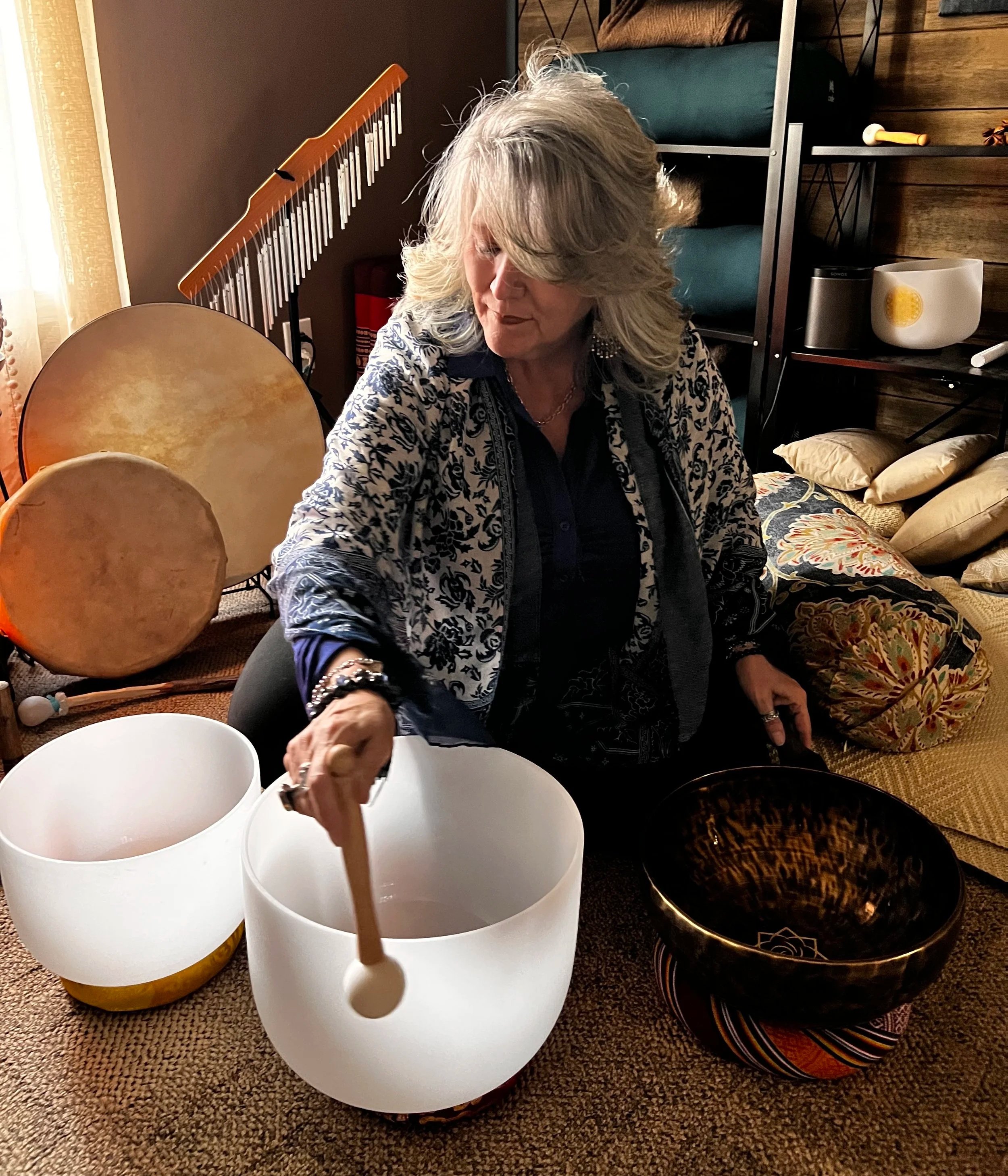
Years later, that same heart led me to Jim, and together we completed our certification in sound therapy. I often think this work really began long before either of us ever opened a textbook. It began in our home, with Native American flute music softly filling the room while the man I loved finally found a little rest.
Caregiving prepared me to understand that comfort is not always the same thing as curing.
Sometimes caring for someone means letting go of the need to fix what cannot be fixed and choosing instead to simply be present. To create an environment where the nervous system can soften, where the body can exhale, and where the soul can find a moment of rest.
That understanding has changed the way I view wellness entirely.
We often chase dramatic transformations. We search for the breakthrough, the miracle, the one thing that will make everything different.
Yet some of the most profound moments happen quietly.
A gentle melody begins to play. Rain begins to fall. The wind chimes answer the breeze. A room grows still.
The nervous system remembers a rhythm it had almost forgotten. Not because disease has disappeared. But because, for a little while, peace has entered the room.
You don't need training to offer this to someone you love, or to yourself. You simply need permission to let a sound — any sound that feels like rest — fill the room and stay a while.
If you've ever walked beside someone living with illness... or if you're carrying more than anyone realizes... my hope is that you'll remember this.
Sometimes healing doesn't arrive as a cure.
Sometimes it arrives as a softened breath, a quiet room, the sound of rain against the window, a favorite melody, or simply someone willing to sit beside you while you listen.
Perhaps the greatest gift we can offer one another isn't the answer, but a place where the soul finally feels safe enough to rest.

Sunset at Airport Mesa, Sedona AZ August 2011
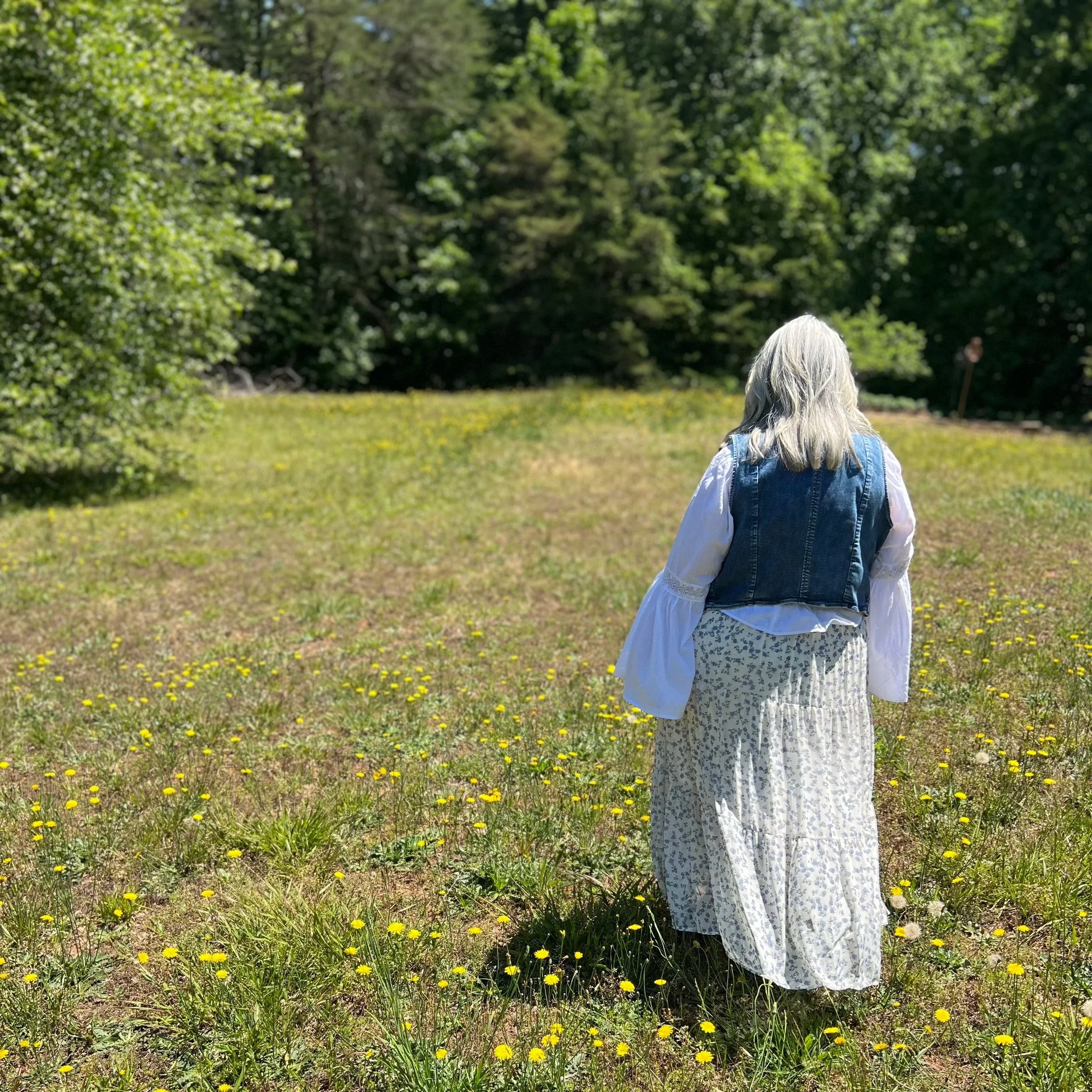
My Kind of Longevity
What if true wellness isn't about living longer, but living more deeply? Discover a holistic approach to health, creativity, purpose, and meaningful living.
None of us knows how many years we've been given.
No supplement, smartwatch, or wellness routine can promise tomorrow. However, we can care for our bodies wisely. We can make thoughtful choices. We can honor the lives we've been entrusted with. But eventually, every one of us reaches the same truth:
Our time here is finite.
Oddly enough, I find that freeing.
Because if I stop trying to control how long I'll live, I can become far more intentional about how I choose to live today.
Over the past few years, I've realized I'm no longer trying to build a business simply to sell beautiful things.
I'm building a body of work.
There is a difference.
A business asks, What can I sell?
A body of work asks, What am I here to leave behind?
That shift has changed everything. It has changed the way I create, the way I teach, the way I gather people together, and even the way I care for my own health.
Health is no longer the destination. It's the vessel.
It's what allows me to write another story, paint another canvas, guide another sound journey, encourage another soul, or sit across from someone who simply needs to know they are not alone.
Those moments become the legacy, not because they're famous, and not because they'll be remembered by the world, but because they ripple outward in ways I'll never fully see.
I've come to believe that legacy isn't built in grand accomplishments. It's woven quietly through ordinary days.
A conversation that changes someone's direction.
A workshop where a stranger remembers they are creative.
A handwritten note kept in a drawer for years.
A prayer whispered over a friend.
A meal shared around a table.
A child watching someone choose kindness.
A painting that gives someone permission to hope again.
These are the things that outlive us.
When I imagine the years ahead, I don't dream about simply adding more birthdays to the calendar.
I dream about filling the birthdays I've been given with enough beauty, truth, compassion, creativity, and faith that they continue speaking long after I'm gone.
That's the kind of longevity I'm interested in.
Not merely living longer, but living so intentionally that every season becomes an offering.
Perhaps that's what stewardship really looks like … not clinging to time, but honoring it, one meaningful day at a time.
If there's one thing I hope my work invites you to do, it's this: don't wait for the perfect season to begin living the life your heart is quietly calling you toward.
Follow your inner compass. Create something meaningful. Care for your body, nurture your spirit, gather with people who help you become more fully yourself, and leave the world a little more beautiful than you found it.
We may never know how many years we have.
But we can decide what we fill them with.
And perhaps, in the end, that's what matters most.